Welcome to the Center for Sociological Research | CIS

Complete Catalog of Studies

Since 1963, the CIS has offered the public an extensive Catalog of Quantitative and Qualitative Studies, providing access to decades of rigorous research and valuable data.

News

El CIS presenta un estudio monográfico pionero sobre la percepción social de la prostitución y la pornografía
  • 26 FEB 2026

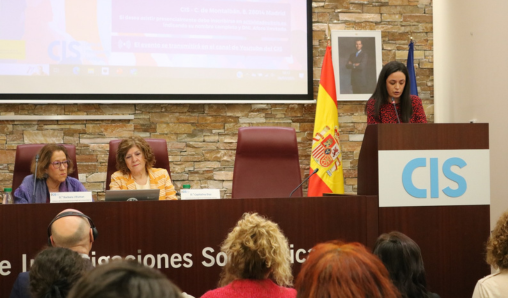
El Ministerio de Igualdad, a través de la Delegación de Gobierno contra la Violencia de Género (DGVG) y el Centro de Investigaciones Sociológicas (CIS) han presentado esta mañana el estudio Percepción de la Prostitución. La directora general de Coordinación e Investigación del CIS, Silvia García Ramos ha agradecido al Ministerio la iniciativa y la confianza depositada en el Centro de Investigaciones Sociológicas, destacando que “al fin y al cabo la razón y objetivo fundacional del CIS, siempre ha sido colaborar con el resto de las administraciones para poder estudiar la opinión pública de la sociedad española, aportando datos de calidad que mejoren la elaboración y puesta en marcha de las políticas públicas. Pues solo con una buena información se pueden tomar buenas decisiones”.  García Ramos ha destacado que la encuesta supone un esfuerzo pionero y un hito fundamental ya que es la primera vez que CIS realiza un monográfico, dedicando todo un cuestionario a preguntar por la percepción social que la ciudadanía española tiene sobre la prostitución y la pornografía, lo que ha permitido profundizar en el tema y poner analizarlo desde múltiples aristas.    Si bien no es la primera vez que el CIS pregunta sobre este tema, tal y como ha desvelado: “Fue hace 40 años, en 1986, en un estudio sobre la imagen del servicio miliar, en el que se preguntaba a hombres jóvenes de entre 16 y 24 años sobre la justificación o no de la prostitución, entre muchos otros temas como el consumo de drogas, el suicidio o pagar menos impuestos. Y también se han realizado otras preguntas sobre consumo o legitimidad de esta práctica en otros estudios como el de salud sexual del 2008”. La directora general de Coordinación e Investigación ha descrito la envergadura metodológica empleada, basada en el sistema CATI, con entrevistas telefónicas y números de teléfono elegidos completamente al azar, tal y como se hace en todos los estudios del CIS. Se ha diseñado con un tamaño de muestra de 10.019 entrevistas, dirigidas a población residente en España de 16 años o más, con cuotas de sexo, edad, tamaño de municipio y Comunidad o ciudades autónoma de residencia.  “No hemos dejado de lado a los jóvenes”, añadió.  “No queríamos olvidarlos porque su opinión también es transcendental en un tema como este, pero también contar con una muestra suficiente que permita que los resultados reflejen la situación del país en el momento en el que se lleva a cabo, y tenga representación nacional y por comunidad y ciudad autónoma”  Precisamente la amplitud de la muestra ha permitido “generar dos submuestras, una de hombres y otra de mujeres con sus correspondientes ponderaciones. Esto nos permite ir mucho más allá del simple cruce por sexo en las preguntas, para conocer de manera diferenciada las opiniones de hombres y mujeres según sus diferentes condiciones sociodemográficas, es decir, vamos a poder saber, por ejemplo, qué piensan los hombres según su edad, su tamaño de municipio, sus estudios; qué opinan las mujeres según su clase social, su recuerdo de voto, etc. Esto es una clave esencial del estudio, porque introduce una importante perspectiva de género en un tema como la percepción de la prostitución, ampliando considerablemente el conocimiento sobre esta materia”.  Y finalmente, ha querido acordarse del papel fundamental de la ciudadanía que accede a contestar las encuestas del CIS “agradecemos a los ciudadanos que han dedicado un ratito de su tiempo a contestar a esta encuesta, y que contestan a todas las encuestas que realiza el CIS cada día. Gracias a su generosidad al dedicarnos este tiempo, podemos seguir trabajando, seguir creando estudios e investigando sobre la realidad de nuestra sociedad. Al fin y al cabo, son ellas y ellos los que contribuyen a que los poderes públicos puedan tener información para generar políticas, a que la comunidad científica continue investigando, y a que la sociedad y los medios de comunicación puedan conocer cuáles son las grandes tendencias sociales de nuestro tiempo”.  El reconocimiento se hizo extensivo al equipo de encuestadores “por su labor diaria y también el de todas las técnicas que han trabajado mano a mano con nosotros para que esta encuesta haya sido posible y por supuesto al personal del CIS, en concreto a la técnica encargada de estudio. Es gracias a su trabajo y profesionalidad por lo que podemos seguir contando con uno de los mejores institutos de opinión publica que existen actualmente”.  La ministra de Igualdad, Ana Redondo, ha comenzado su intervención asegurando que la prostitución “no es un trabajo ni una actividad económica más, ya que está atravesada por la pobreza, la coerción y la vulnerabilidad”  Y que gracias a este estudio del Centro de Investigaciones Sociológicas (CIS) se escucha el mensaje ciudadano: “Se trata de ciencia, sociología y demoscopia, y supone un aval para toda esa estructura legislativa y administrativa que estamos impulsando”.

News
The majority of the population considers prostitution a type of violence against women.
  • 26 FEB 2026

The Ministry of Equality, through the Government Delegation against Gender Violence (DGVG) and in collaboration with the Center for Sociological Research (CIS), has launched a survey targeting residents of Spain aged 16 and over. Its objective was to analyze societal perceptions of pornography and prostitution, as well as to understand how the public assesses their risks, impacts, and consequences in terms of equality, safety, and human rights. The ultimate goal is to generate robust empirical evidence to inform data-driven public policies, with a particular focus on preventing violence against women. The study, based on 10,019 interviews, analyzes citizens' attitudes, beliefs, and opinions regarding pornography, digital exposure to sexual content, victimization through the dissemination or non-consensual use of sexual images—including those generated with artificial intelligence (AI)—the perception of prostitution, and the measures considered appropriate to prevent and eradicate it. In light of the survey results, nearly 69% of respondents strongly or somewhat agree that prostitution is a form of violence against women, a percentage that rises to 75.1% among women. Furthermore, 79.1% strongly or somewhat agree that prostitution jeopardizes the dignity of those who engage in it, and over 75% believe that most women in prostitution are victims of sexual exploitation. On the other hand, more than three-quarters of the population consider that prostitution is not a job "like any other" and 79.8% reject the idea that it is "a way of exercising sexual freedom". Eighty-two percent of the population believes that paying for sex is a behavior more typical of men, as is watching pornography. Meanwhile, prostitution is perceived as a behavior more typical of women. Sixty-three percent of the population would disapprove of a male relative paying for sex. This rejection is even more pronounced among women, reaching 71.1%. Furthermore, the analysis by the DGVG and the CIS reveals a clear aversion among women to having a relationship with someone who pays for sex, with 91.2% stating they have no such intention. The public perceives prostitution as a phenomenon closely linked to socioeconomic vulnerability and violence. Seven out of ten people surveyed believe that women in prostitution are in it out of economic necessity, while 41.5% believe they are forced into it. Regarding pornography, 71.6% believe it promotes violence against women, and 93.3% of survey participants indicate the need to restrict minors' access to this content. They believe the responsibility for establishing these restrictions should lie primarily with families, parents, and also with the government. Furthermore, paying to view sexual acts on online platforms is considered a form of prostitution by seven out of ten people surveyed. Digital platforms Six out of ten people say they are aware of digital platforms like OnlyFans or JustForFans, with awareness being higher among men and those aged 16 to 34. According to those interviewed, financial need is the main reason some people create intimate content on these platforms. When asked about the risks that women who offer intimate or sexual content on digital platforms may face, the responses point to blackmail or extortion, unauthorized distribution, or harassment. The vast majority of the population, 95%, believes that digital platforms should be required to remove non-consensual sexual content published on them. Eradication of prostitution Regarding measures to eradicate prostitution, almost half the population believes the most necessary is strengthening education on equality, sexuality, and human rights from childhood. Likewise, the provision of social and economic programs to help women leave prostitution is seen as essential. Three out of ten respondents believe that punishing those who pay for prostitution and those who profit from the prostitution of others, but not the prostituted women, could be another effective measure. Regarding those who pay for prostitution, almost half of those who believe punishments should be imposed on those who pay for or profit from prostitution understand that this behavior should carry educational and economic sanctions. As for those who profit from the sexual activity of others, imprisonment is the most frequently mentioned measure, at 82.4%. The majority of the population, 85.6%, believes that punishing those who profit from the prostitution of others would contribute to reducing the trafficking of women and girls for sexual exploitation. In short, perceptions of pornography are largely critical, linking it to violence, the distortion of sexuality, and inequality. The results of the survey reflect a widespread rejection of positions that normalize prostitution, indicating a social orientation aligned with abolitionist approaches.  

Information Note
On the occasion of the 45th Anniversary of 23F, what did the CIS ask in 1981?
  • 25 FEB 2026

To mark the 45th anniversary of the events of February 23, 1981, the CIS recalls the results of a survey conducted among Spanish citizens regarding that episode in recent history. In study no. 1,273 of February 1981 entitled " Investiture of Mr. Leopoldo Calvo Sotelo and II Congress of UCD ", the Center for Sociological Research (CIS) included in its questionnaire some questions related to the event. The survey, among other things, asked about the time at which the citizens interviewed had learned of the event and through which media. It also inquired about their state of mind, their initial reaction to the event, and whether they initially thought it would fail or have any chance of success. Through three infographics, the answers to various questions about the knowledge, perception, and social memory of that event are presented visually, with the aim of providing a data-driven perspective and facilitating its understanding. The full study conducted at the time can be accessed at the following link: Study 1.273.      

News

IV Jornadas sobre Sociología del Género 2025

Con motivo del Día Internacional de la Mujer, el CIS celebra el próximo 6 y 7 de marzo, las IV Jornadas sobre Sociología de Género, este año centradas en la mujer y la política.

Ver última convocatoria

Summer Courses

Cursos de verano

National Award for Sociology and Political Science

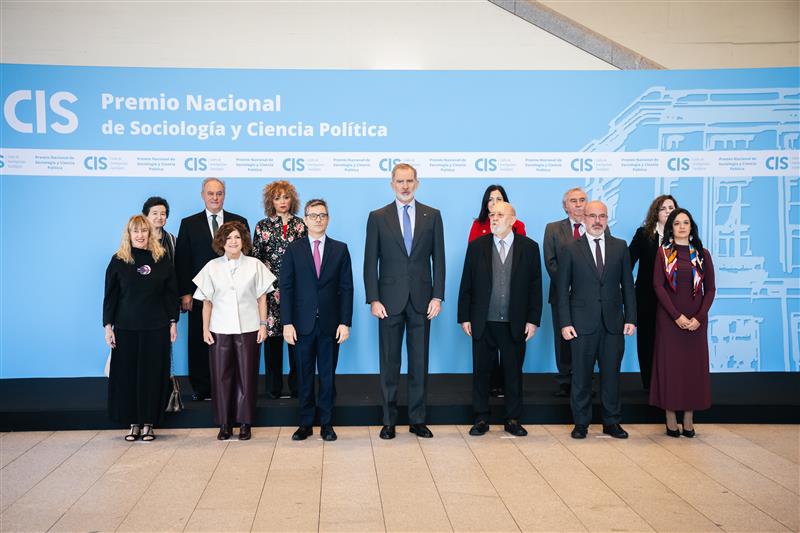
The award annually recognizes outstanding academics in sociology or political science for their significant contributions to the discipline, either through their research career or a specific work.

Ver último galardón
National Award for Sociology and Political Science

How we conduct surveys

How to know if the phone extension calling you is from CIS?

If you wish to verify the extension from which CIS has called you, you can do so through the following phone numbers. You will be informed about the study being carried out and the phone extension used will be verified.

Mornings Schedule: From 8:30 to 15:30. Contact phone: 678 076 136
 
Afternoons Schedule: From 15:30 to 21:30. Contact phone: 678 076 136

Our History

The history of the CIS dates back to the mid-20th century with the creation of the IOP (Institute of Public Opinion), where the history of our country began to be revealed through the lens of Spanish public opinion.

Get to know our history
Logo del Portal de la Transparencia del Gobierno de España
Logo de Datos Abiertos del Gobierno de España
Logo de administracion.gob.es
Logo del Ministerio de la Presidencia, Justicia y Relaciones con las Cortes